

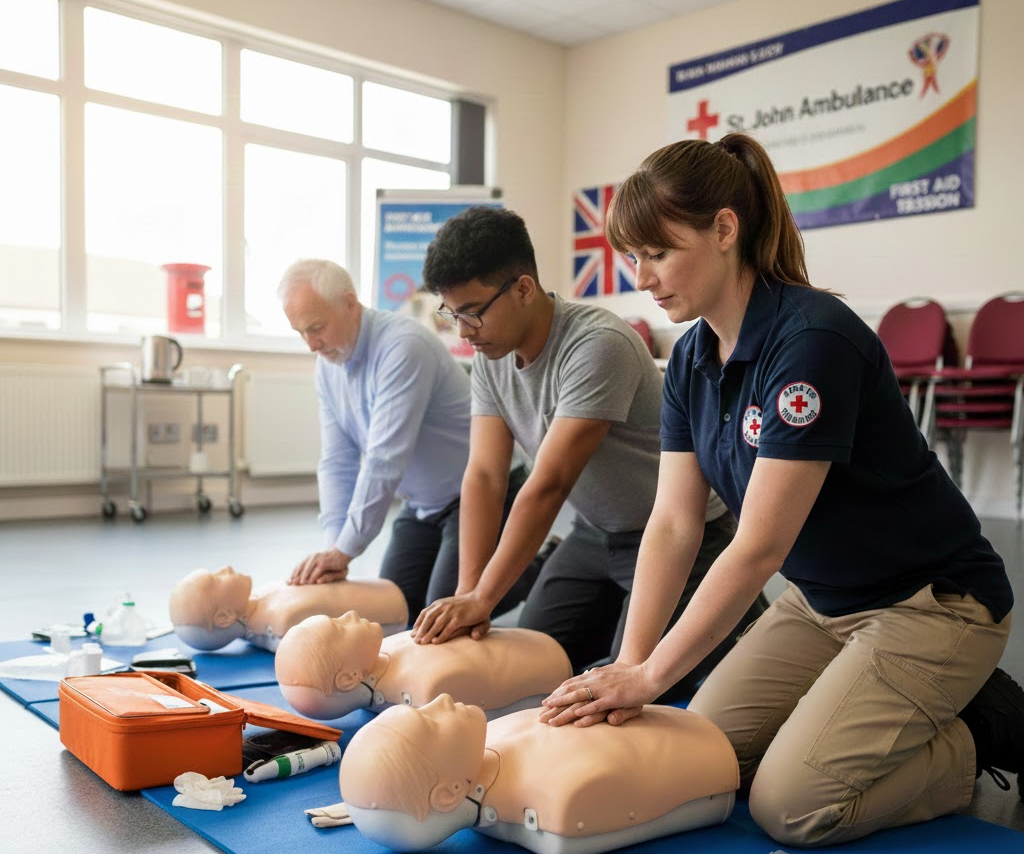
A first aid instructor teaches people how to respond during emergencies. Workplaces, schools, gyms, and charities rely on practical safety training.
In the UK, demand for this training remains steady as employers need to meet health and safety requirements.
In fact, two in five (38%) employees have not had any first aid training. This shows that many workers lack essential skills. There is a growing need for certified first-aid trainers across many industries.
This page builds on our step-by-step guide to become a freelancer in the UK, focusing specifically on becoming a freelance first aid trainer.
At Work Your Way, we offer local insights and practical advice to help you develop your freelance career.

What a Freelance First Aid Trainer Does
A first-aid instructor provides training courses that meet the required standards for firms. These courses help employees prepare for emergencies. Instructors organise classes, teach hands-on skills, and assess learners’ understanding of the material.
Common tasks include:
- Preparing course material as per UK standards
- Leading in-person classes at client locations
- Evaluating learners through scenarios
- Completing certification documents
- Advising clients on when to schedule refresher courses
If you have not chosen your main freelance service yet, work through Step 2 in the main guide, then come back to this page.
Skills and Tools for Freelance First Aid Trainer
Here are the skills and tools freelance first aid trainers rely on:
Core Skills:
- Confident instruction
- Clear explanations under pressure
- Practical demonstration skills (teaching and first aid techniques)
- Learner assessment
- Knowledge of UK first aid standards such as HSE
Tools and Software:
Most freelancers use the following tools:
- Training manikins
- AED trainers
- Bandaging kits
- Presentation slides
- Simple invoicing tools like Envoyce
Starter costs are low, and most equipment can be used again in different sessions.
Helpful Soft Skills:
- Calm communication
- Time planning
- Basic client handling skills
- Clear follow ups
Use Step 1 in the main guide to match these skills to your strengths before you commit to freelance first aid training.
How to Start as a Freelance First Aid Trainer
Here’s how to become a freelance first aid trainer in the UK, based on your beginning point:
-
Already Work in This Role
You can start freelancing by taking occasional private gigs while keeping your job. Use your weekends or evenings for this. Organise your transition using Step 10 of the pillar.
-
Switching from Another Career
If you’ve experience in teaching, nursing, fitness, childcare, or security, you can easily apply those skills.
Step 3 of the pillar helps you choose a niche that fits your background.
-
No Experience Yet
Step 7 of the pillar explains the complete portfolio approach. This method supports how to start freelancing with no experience by focusing on proof rather than job titles.
Provide affordable beta sessions to local groups. Create a simple portfolio that includes your course objectives, framework, participant feedback, and results.
Portfolio Ideas for Freelance First Aid Trainer
A strong first aid training sample shows:
- Course level
- Learner type
- Learning goals
- Session structure
- Feedback
Useful project ideas include emergency first aid course for a:
- Local gym
- Paediatric first aid for childminders
- Refreshing training for a small office
Use the case study format:
- Context
- Problem
- Approach
- Session delivery
- Learner results
- Lessons learned
Follow the portfolio structure in Step 7 of the central guide, then include these first aid training examples.
Rates and Client Types for Freelance First Aid Trainer
Starter Rates:
Follow the starter rate framework on the Step 4 of the main guide. Beginners often set daily rates based on local demand. As they gain skills and experience, their rates will increase.
Common Client Types:
- Small businesses and charities suit beginners
- Schools and nurseries suit experienced trainers
- Corporate clients suit advanced trainers
Simple Pricing Formats:
- Pricing often works per day
- Some trainers price per course
- Retainers work for annual refreshers
Use the freelance income and tax guide to assess how your first aid training rates sit against income tax, National Insurance, and expenses.
Set Up to Work From Home as a Freelance First Aid Trainer
Build on Step 6 on the main guide.
Home organisation focuses on planning and storing your equipment effectively. A calm space helps you manage your planning and online tasks better.
Many trainers schedule their services on one or two weekdays and reserve evenings for administrative tasks.
Create a simple one-page profile that includes your certifications, course types, service areas, and contact information. This profile gives a clear overview of your setup.
Next Steps If You Want to Freelance as a First Aid Trainer
Freelance first aid training values action over overthinking, allowing you to progress by building, testing, and improving your work in real situations.
- Understand the freelance first aid trainers role
- Match skills and tools
- Build a small first aid training portfolio
- Set starter rates and target clients
- Secure one paying client while employed
Use the main step by step guide for your overall plan, then return to this first aid training page whenever you refine services, adjust rates, or pitch new clients.