

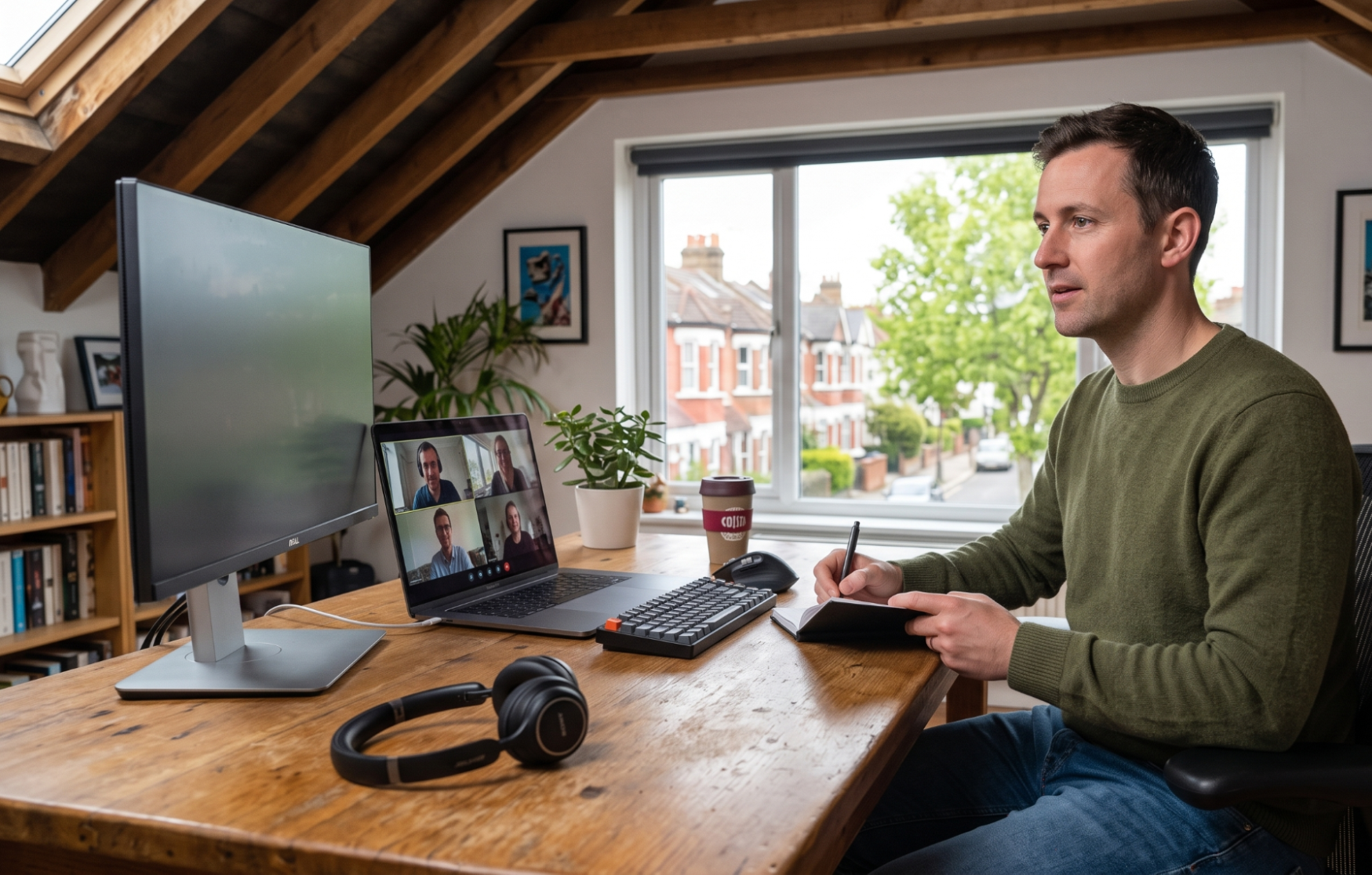
For two years, I worked on my laptop at the kitchen table until a consistently stiff neck forced me to reconsider my setup. Suspecting my workspace was the culprit, I decided to ask five other freelancers about their everyday setups to see what they could not live without.
Many people in the UK operate as self-employed professionals rather than traditional employees. According to IPSE, about 2 million freelancers work across the UK, using spare rooms, sheds, and even kitchen tables as their offices. Everyone I spoke with had different budgets and lived in different places. However, their practical insights changed my routine for the better.
At Work Your Way, we assign freelancers to overcome challenges and achieve success. We provide the tools and resources to help you navigate the complexities of freelancing, manage work-life balance, and take control of your career.
Why I Avoid Expensive Equipment
Every freelancer I spoke with highlighted that the setup is less important than the limits it creates. A 2026 ONS report found that 28% of working adults in Great Britain were using a hybrid work schedule in early 2025. Your mind requires a clear sign when work starts and, crucially, when it ends. Without this, work can easily spill into your evenings, and your weekends won’t feel like proper breaks.
Having a dedicated workspace can really help you focus. This space could be anything from a cosy corner in your room to a small closet, or even a separate shed or building in your garden. The following stories will show you the different creative ways people have set up their own workspaces to make this idea work for them.
For a visual representation, check this guide that clearly explores how to build a highly productive home office without overspending.
What These Freelancers Can’t Do Without
Each freelancer shared one thing they need to do their best work. Their answers ranged from simple fixes to major commitments.
Sara Swears by Her Chair
Sara, who writes copy and lives in a small apartment in Manchester, does not have an extra room to work in. Her only purchase was a great ergonomic chair that she found used for £90. She mentioned that her back pain disappeared in two weeks, and she no longer felt exhausted in the afternoons. All her other work equipment is either borrowed or inexpensive.
Tom Blocks the World Out
Tom creates logos while living in a shared house in London. He often listens to music from his housemates’ playlists. His noise-cancelling headphones are quite expensive, costing more than his desk. When he puts them on, everything around him disappears, allowing him to focus on his work. He compares wearing them to his daily commute. It helps him get into the right mindset.
Catherine Doubles Her Screen Space
Catherine, who works as a bookkeeper in Leeds, bought a second monitor because she was tired of consistently switching between different spreadsheets. She thinks it saves her about an hour every day. Now, she can keep client information on one screen and invoices on the other. Her shoulders do not hurt anymore from straining to see a small laptop screen.
Dan Follows the Daylight Around
Dan, who lives in Bristol, builds websites. He moved his desk twice before he put it next to a window that faces south. The natural light helps him feel energetic even in winter. On cloudy afternoons, he uses a warm desk lamp. He mentioned that when the morning sun shines on the keyboard, it feels like a friendly greeting from a coworker.
Megan Works From the Garden
Megan, an illustrator living in Guildford, needed more space than a corner desk offered, so she decided to get a garden office for her home. Her workday begins and ends with a short ten-second walk across the lawn, coffee in hand. She finds that the scent of cedar and the sound of rain on the roof help her concentrate. To keep her creative juices flowing, she keeps desk and equipment tucked away in a garden office she had custom built by Surrey Hills Garden Buildings. This ensures her workspace stays calm and uncluttered.
Conclusion
Upgrading your home office does not require a large budget. First, fix the problem that bothers you most each day, such as pain, loud noises, or frequent interruptions. Then, focus on creating a clear boundary between your work life and home life. Choose just one idea from these five freelancers and try it out this week. Your body and productivity will thank you later. For more insights, contact us at Work Your Way.